


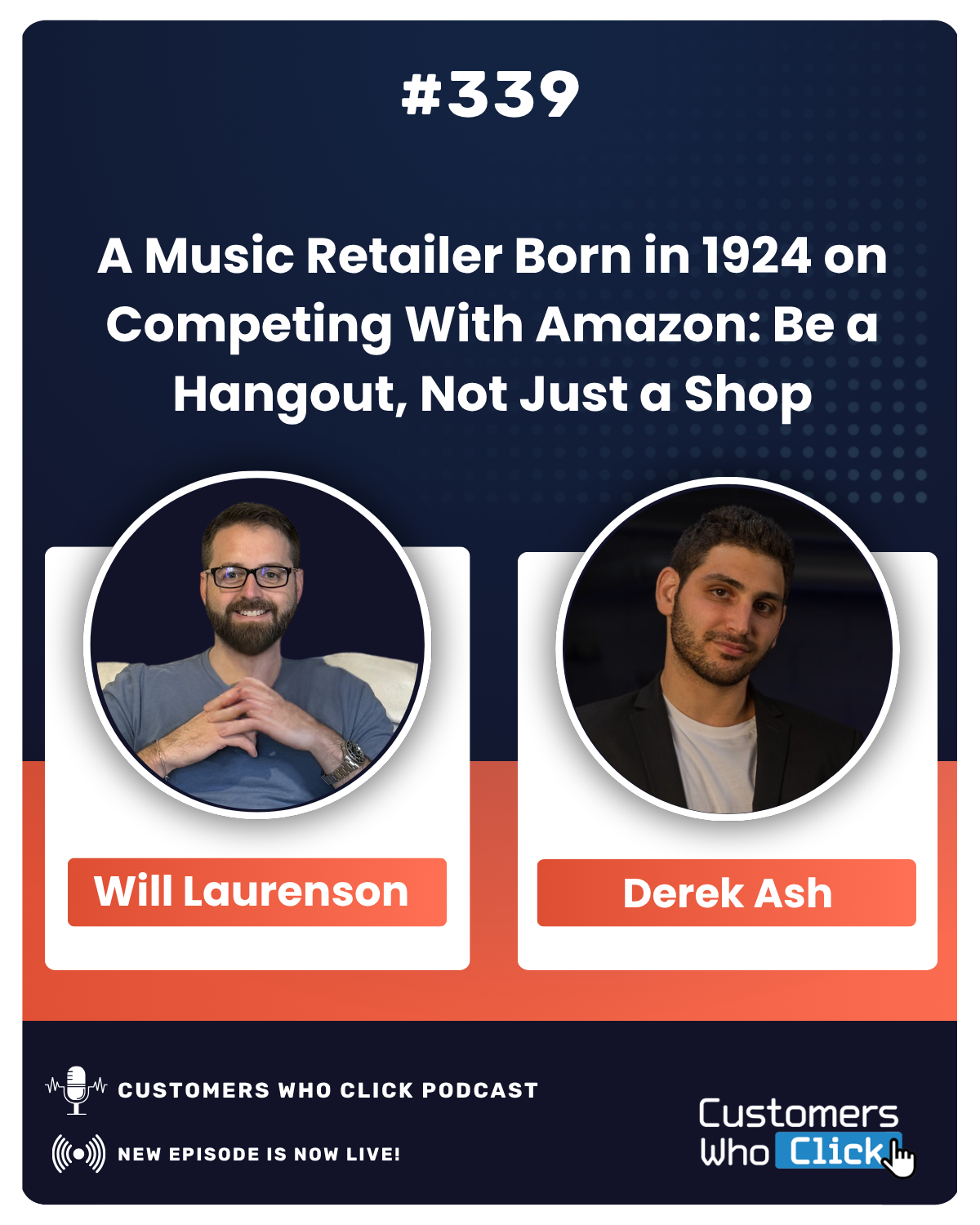
339. Every Competitor Charges the Same Price (and the Upsell That Only Works on the Phone) - Derek Ash, Sam Ash Music
When every retailer charges the same price for a brand new guitar, price cannot win the sale. Sam Ash Music sells in exactly that kind of market, and it shapes how the business competes online. Derek Ash explains what wins instead: speed, stock, real musicians and a lot of patience with the upsell.
Derek is the e-commerce director at Sam Ash Music, a family-owned musical instruments retailer founded in Brooklyn in 1924. He is the fourth generation of the Ash family to work in the business and the first to grow up in a fully digital one. The company has moved out of omnichannel retail and now runs e-commerce, a phone sales programme and click and collect, across 190 brands and more than 30,000 SKUs.
Competing when price is fixed
Derek described a price-controlled market. A brand new product for Christmas should cost the same at Sam Ash as at any competitor, so the business sells on service, reputation and people who stand by the product. That starts with speed. A set of strings is often needed for a gig that week, so Sam Ash runs an order-by-4 cutoff for getting orders out the door and has invested in a couple of warehouses. Stock matters just as much, because many sales happen simply because the item is in the right place at the right time.
The rest is reassurance. Chat pops up on the product page, the return policy has been extended, manufacturer warranty information is shown, and video sits at the top of the page so shoppers can see where a product fits in their setup.
Finding musicians where they already are
With no top seller carrying the catalogue, Google Search and Shopping stay low funnel and catch people looking for an exact item. For awareness, Derek said Reddit has worked better than expected. Subreddits for synthesizers, microphones and vintage amplifiers help, and so do bands whose fans tend to be musicians, such as Rush.
The team also joins Facebook groups as themselves. Derek encourages salespeople to be "my guy at Sam Ash", a real person who plays in a live band, rather than the brand. Meta ads handle awareness, including video that puts anyone watching 10 seconds into a prospecting audience.
Customers who arrive already researched
Derek has noticed customers arriving better qualified because they have researched with an LLM or a chatbot. Sam Ash used to worry that too much choice was a problem and steered people to best sellers. Now the job is to reassure, then add what the chatbot may not know, such as a product that has just come out.
He is also excited about conversational search, where a shopper describes the sound they want instead of listing specs. His view on agents is simple. You cannot optimise only for agents, you optimise for the customer experience.
Why online upsells barely move
Online upsells see little uptake, Derek said, because shoppers arrive with a budget and want to get in and out. On the phone it changes. Accessory sales rise when someone validates the order and checks the customer has everything they need.
Relevance is the hard part. Instruments are not standardised, so some beginner guitars include a case or a small amp and some portable keyboards include a power supply. Sam Ash works from more than 500 product attributes, including a case field with no case, gig bag or hard case, so it never offers something already in the box.
Retention through the small purchases
A guitar upgrade might come once every 3 years, and Sam Ash cannot control when. It can influence accessories. Derek's favourite example is a microphone stand attachment that holds a drink on stage. Email content like 10 wacky gear ideas relates to the customer without a hard sell.
Key takeaways
- When price is fixed, compete on delivery speed, stock availability and reassurance on the product page.
- Put staff into communities as people, not as the brand.
- Treat customers who arrive with AI-researched shortlists as qualified, then add what the chatbot cannot know.
- Expect low online upsell uptake, and use the phone and email to suggest accessories that fit.
- Fix product attributes first, so recommendations never offer something already included.
Derek also covers Amazon, the good, better, best approach to assortment, and a Depression-era store that was as much a hangout as a shop. Listen to episode 339 of the Customers Who Click podcast for the full conversation.