.png)
.png)


.png)

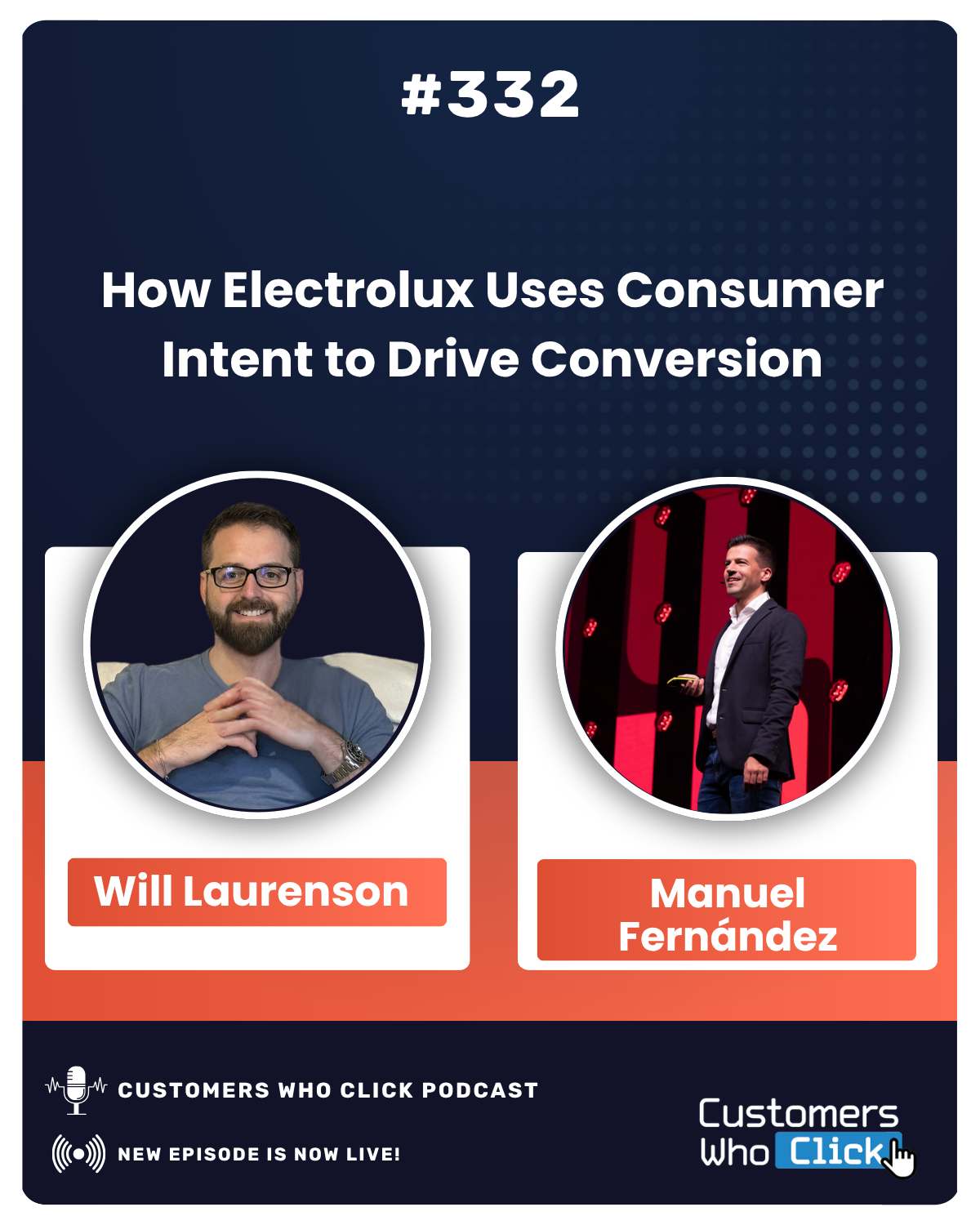
332. Why Electrolux Won't Show You an Oven When You're Buying a Dishwasher (and Why Its Basket Is Just 1.4 Items) - Manuel Fernandez, Electrolux
Manuel Fernandez didn't need to convince Electrolux shoppers to fill a cart with appliances. He needed to convince them to buy the one they came for, quickly and without friction, and only then, right at checkout, consider one more thing.
Fernandez is head of conversion and consumer activation for Electrolux's direct-to-consumer e-commerce business. Originally from Spain, he studied and worked across Poland, the US and Sweden before moving into e-commerce at the Nordic online eyewear brand Lensway. He has been at Electrolux since 2017, building out a D2C channel inside a business that has always sold primarily through retailers.
Building D2C inside a B2B giant
Electrolux is one of the biggest home appliance groups in the world, selling under brands including Electrolux, AEG, Frigidaire in the US and Zanussi in the UK, across major appliances, small domestic appliances, accessories and spare parts. The B2B side, selling through retailers, remains the biggest part of the business. But Fernandez says D2C matters because it keeps Electrolux close to the consumer, and that understanding feeds back into the wider business too.
Black November, not Black Friday
Right now the team's focus is peak season. Electrolux runs a campaign it calls Black November, which now spans more than a month. It opens in October with offers for employees, friends, family and corporate benefit schemes, then goes fully open to consumers in November. Retailers run their own campaigns independently, and Electrolux's D2C team focuses only on its own channel and targets.
"This campaign is no longer about the discounts and the best offer, because everyone is doing that. It's more about really offering the best experience, the best value to the consumers, and having all our channels and functions working together to deliver this goal."
Manuel Fernandez
One category at a time
Most Electrolux shoppers buy one or two appliances, and the average online basket is around 1.4 units. Many purchases follow a broken appliance rather than a planned upgrade, though shoppers renovating a whole kitchen are routed to a separate channel built for that journey.
Because of this, Electrolux personalises the on-site experience heavily by intent. A shopper who lands looking for a washing machine sees washing machine content and offers, not ovens or dishwashers. Fernandez says this comes from understanding, as early as possible, what a shopper actually needs, since even appliance searches can mean looking for repairs or warranty support rather than a new purchase.
Upsells belong at checkout, not before
Electrolux does grow basket size, but not by distracting shoppers early. Bundles, like a washing machine paired with a dryer, are offered for shoppers to pick and choose, and accessory recommendations appear at checkout, tightly tied to the item already in the basket.
"You've got to maximise your margin, because if you don't sell someone that accessory, they're probably not going to come back to you for it. If it's a small thing, there's a higher chance they just go to Amazon or pick it up at a store nearby."
Will Laurenson
Product pages written for shoppers, not engineers
Fernandez says a lot of Electrolux's product content historically made sense from an engineering point of view but not a consumer one. The team is now rewriting descriptions around real questions, like which washing machine suits a family of six or which appliance is most energy efficient, and adding user generated content to show how other consumers actually use the products. Product imagery and galleries have also been tested and reworked from a shopper's perspective rather than a technical one.
Research before testing, not the other way round
With 24 European markets and limited capacity, Electrolux cannot test every idea that comes in. The conversion team now runs research and internal workshops to decide where to focus over the coming months, prioritising ideas that reduce friction over ones that are simply the most exciting to build. Small pilots prove an idea's value before the team commits to a bigger, more expensive build.
Central builds the tool, local teams decide how to use it
Electrolux's D2C business only started selling directly in 2020 and 2021, and the channel and its local teams are still maturing. Capabilities like personalisation and bundle building are developed centrally, then handed to each market to apply based on local consumer expectations and channel maturity, such as some markets moving early into TikTok Shop. When a test succeeds in one market, like the UK, others often want it immediately, because Electrolux's e-commerce directors compare notes across the business.